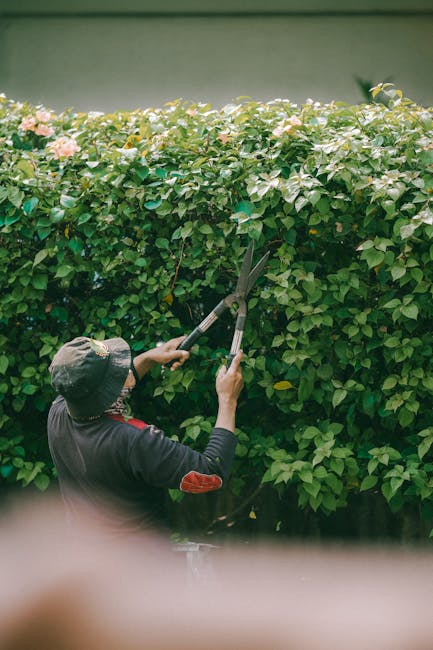
South Hornchurch gardeners tackling difficult garden access jobs: practical solutions for tight, awkward and hard-to-reach gardens
If you have ever looked at a steep side return, a narrow alleyway, a basement courtyard, or a garden hidden behind a row of terraced homes and thought, "How on earth would anyone get tools in here?", you are not alone. South Hornchurch gardeners tackling difficult garden access jobs deal with those exact problems every day, and the difference between a stressful job and a smooth one usually comes down to planning, the right equipment, and a very calm approach.
In a place where homes can have compact plots, shared pathways, side gates that barely swing open, and all sorts of obstacles sitting between the front door and the back fence, access matters just as much as the gardening itself. This guide explains how difficult-access garden work is assessed, what the job often involves, the risks to watch for, and how to make the whole process safer, tidier, and more efficient. If you are comparing services or simply trying to understand what is realistic, this will help a lot.
Why South Hornchurch gardeners tackling difficult garden access jobs Matters
Garden access sounds like a small detail until you are the person trying to move a mower, bags of compost, hedge clippings, paving slabs, or a chipper through a route that feels almost designed to make life awkward. In South Hornchurch, that can mean long narrow passages, limited parking, shared entrances, awkward steps, and gardens where the main working area is tucked far from the road.
When access is poor, every part of the job becomes more complicated. Carrying materials takes longer. Waste removal becomes slower. Heavy items may need to be broken down, lifted in stages, or moved by hand in smaller loads. Even simple tasks like hedge trimming or lawn care can become more demanding if equipment must be ferried through the house or around tight boundaries. That is why access planning is not an add-on. It is the foundation.
Truth be told, difficult access can also affect quality. If crews are rushed, cramped, or constantly moving around obstacles, it is harder to work neatly and safely. Plants can get damaged. Pathways can be scuffed. Soil can be spilled. The job may still get done, but not always well. Good access management protects the garden and the people working in it.
There is another angle too: access affects what is possible. Some jobs may be straightforward with the right routing and preparation, while others might need modified methods, smaller equipment, or a phased approach. That is where practical experience matters. For example, a garden that seems too awkward for a proper makeover might still be perfectly manageable once waste routes, tool drop points, and material storage are thought through properly.
How South Hornchurch gardeners tackling difficult garden access jobs Works
At its simplest, access-led gardening means designing the work around the property rather than forcing the property to fit the work. That sounds obvious, but in practice it means a lot of careful thinking before a single spade goes in the ground.
The process usually starts with a look at the route into the garden. Is there front access? A side gate? A rear alley? Can machinery pass through, or must everything be hand-carried? Are there tight corners, low archways, fragile surfaces, or steps that create a lifting risk? These details shape the plan.
Next comes the job itself. A lawn may need a lightweight mower rather than a heavier machine. A hedge trim may be done in sections so cuttings do not block the narrow route out. A landscaping project might need materials delivered in smaller drops instead of one large delivery. In more involved cases, a team may need to use wheelbarrows, carrying frames, bags, or modular materials that are easier to move through narrow access.
It is also common to split a job into stages. For instance, clearing overgrowth first makes room for safer movement. Once access improves, deeper maintenance or redesign work becomes more practical. This is one reason a service like regular garden maintenance can be so useful in hard-to-reach spaces; keeping things under control prevents access from becoming even worse over time.
Communication matters throughout. Before the work starts, it helps to agree where tools can be set down, where waste should be stacked, and whether any indoor routes will be used. If there are pets, children, or vulnerable surfaces, that should be discussed too. The better the plan, the fewer surprises on the day. And honestly, surprises are rarely helpful on a tight site.
A practical note on access assessments
In a proper access assessment, no one should just glance at the gate and assume they know the job. Experienced gardeners look at gradient, width, turning space, surface condition, weather exposure, and how the route will work once the task starts. A driveway can look fine until a delivery sack has to be turned around a corner. A side passage can seem usable until you realise there is nowhere to pause and safely carry tools through.
Key Benefits and Practical Advantages
Choosing gardeners who are comfortable with difficult access work brings some very real benefits. Some are obvious, some only become obvious after you have lived through the alternative.
- Less damage to property - careful route planning reduces scuffs, broken stems, stained paving, and crushed edges.
- Safer work practices - good access planning lowers the risk of trips, slips, and awkward lifts.
- More efficient jobs - time is spent on gardening rather than on battling the site.
- Better finish quality - when the team is not fighting the layout, the result usually looks cleaner and more controlled.
- Improved waste handling - clippings, soil, and cut branches can be removed without turning the garden into a mess.
- Smarter material use - hardscape pieces, mulch, or planting materials can be staged more effectively.
There is also a value point that people often miss. Difficult access can make a job look more expensive before anyone has even started, but a well-planned approach may actually save money by avoiding waste, reducing labour time, and preventing avoidable mistakes. That is not a guarantee, of course, but it is often how it plays out.
For many homes, especially smaller urban plots, access-aware gardening also opens up better design choices. Vertical planting, compact seating, and low-maintenance surfaces can all be selected with the route and available movement in mind. Articles like container gardening for busy urbanites and create a lush living wall with vertical gardening show how space-efficient ideas can work beautifully where access and space are both tight.
Who This Is For and When It Makes Sense
This kind of service is not only for "difficult" gardens in the dramatic sense. It is often the right fit for ordinary homes with one awkward feature that changes everything.
You may need access-focused gardeners if you have:
- a long, narrow route to the rear garden
- a side entrance that is too tight for standard equipment
- steps, slopes, or uneven paving
- shared access with neighbours
- a garden hidden behind extensions or outbuildings
- limited vehicle parking close to the property
- heavy waste to remove from a cramped site
- fragile borders, glass, decking, or indoor passages that need protection
It also makes sense when you are taking on a job that involves more than routine tidying. A neglected garden revival, for example, can produce huge volumes of waste and thorny cut-back material. If the access route is restricted, even a simple clear-up can become a logistical puzzle. A useful reference point here is turning the page on a neglected garden revival, because overgrown spaces often need access planning before the visible work begins.
Homeowners planning privacy screening, hedge work, or boundary improvements may also benefit. If the only route into the garden is through a narrow side return, then future maintenance matters too. In that case, a project based on dense planting or tall hedging should be chosen carefully. See also enhance seclusion with swiftly growing hedges and hedge trimming South Hornchurch for maintenance considerations.
And if you are simply not sure whether the site is too awkward? That is exactly the sort of question worth asking early. A good gardener would rather inspect the route, talk through the constraints, and say what is realistic than promise the moon and then start improvising. Nobody wants that.
Step-by-Step Guidance
Here is a practical way to approach difficult-access garden jobs without chaos. It is not fancy. It just works.
- Map the access route
Walk the path from the street to the work area. Note gate width, steps, turns, loose slabs, low branches, lighting, and anything that could catch wheels or feet.
- Identify the heaviest items
List the largest tools, waste volumes, or materials involved. A job with one mower is different from a job with sleepers, turf rolls, or hedge waste by the tonne - well, not literally every time, but you get the idea.
- Decide what can be broken down
Can materials be supplied in smaller sections? Can waste be bagged rather than loaded loose? Can long branches be cut into shorter lengths on-site?
- Set working and storage points
Choose a place for tools, waste piles, water access, and temporary materials so nothing blocks the route.
- Protect sensitive surfaces
Use boards, coverings, or sensible moving practices where paving, decking, or indoor flooring needs care.
- Work in phases
Clear, prune, lift, and shape in a sequence that makes the site safer as you go.
- Review the exit route
Think about how waste leaves the property. Access problems often show up at the end of the job, not the beginning.
If the work includes paths, patios, or boundary lines that have become cluttered or slippery, it may be worth planning around a surface clean as well. For example, patio cleaning can remove grime and make a tight route safer to use. Likewise, if boundary access is the issue, a project may involve fencing work or other structural changes to improve movement in the long run.
Expert summary: the best difficult-access jobs are not won by brute force. They are won by planning, sequencing, and choosing methods that respect the site. Slow first, smooth later.
Expert Tips for Better Results
Small details make a big difference on access-heavy jobs. These are the habits that usually separate a tidy professional job from a frustrating one.
Use lighter, modular kit where possible. A compact mower, sectional cutting tools, foldable transport gear, and manageable bags of waste are often more useful than one heavy all-purpose machine. On a narrow site, lighter gear can actually be the smarter choice, even if it looks less impressive sitting in the van.
Start by making the route easier. A quick trim back of overhanging growth, removal of loose debris, or temporary clearing of obstacles can transform the job before the main work begins. This is one reason a small initial tidy can save a lot of grief.
Keep cuttings moving. On tight sites, do not let waste build up where it blocks movement. Bag it, stack it neatly, move it out, repeat. It is repetitive, yes. But it keeps the job flowing.
Think about weather. Wet steps, muddy side access, and slippery paving can turn a simple carry into a hazard. A dry morning helps. A damp Tuesday after a heavy shower? Less fun. This matters especially if you have read about keeping your garden thriving in stormy conditions, because storm recovery and access problems often go hand in hand.
Use the site's natural routes. Sometimes there is an old side path, rear alley, or service run that is better than forcing everything through the main garden. The best route is not always the shortest one.
Be realistic about timing. Access issues slow work down. That is normal. Rushing only creates damage or sloppy finishing. A little patience here saves a lot of cursing later. Not that anyone would ever curse under their breath while hauling a sack through a narrow gate...
If your garden is also exposed to wind or winter stress, it may be worth thinking about the broader design. wind defence tactics for a thriving garden and innovative approaches to protecting plants in winter are both useful examples of how seasonal conditions influence access and planning.
Common Mistakes to Avoid
When access is tight, small mistakes become big ones fast. Here are the ones that show up most often.
- Assuming the route will "just work" - this is the classic one. It often does not.
- Bringing oversized equipment - if it cannot fit safely, it is not the right tool for the site.
- Ignoring waste exit strategy - where clippings go matters as much as where you cut.
- Working without protecting surfaces - one badly placed wheelbarrow can ruin a neat path.
- Leaving obstacles until later - by the end of the day, the tight route is usually even tighter.
- Underestimating time - access delays are real, even on a fairly modest job.
One of the biggest practical errors is failing to consider the knock-on effect of a garden's layout. For example, if you trim a hedge without planning where the cuttings will fall, you may block the only usable path out. The same goes for lawn jobs, especially if the exit route crosses the area being worked on. That is why services such as lawn mowing and lawn care need a site-specific plan where access is difficult.
There is also a design mistake people make after the job: choosing features that make future access worse. Huge planters, awkward edging, or dense borders can look lovely on day one and become a nuisance by month six. You want a garden that still makes sense when it needs maintenance, not just when it is photographed in perfect light.
Tools, Resources and Recommendations
The exact kit depends on the job, but access-sensitive gardening tends to rely on tools that are easy to carry, easy to store, and easy to use in confined spaces.
| Tool or approach | Why it helps on hard-access jobs | Best used for |
|---|---|---|
| Compact mower or small hand tools | Fits narrow routes and reduces strain | Lawn work, edging, light maintenance |
| Heavy-duty garden bags | Makes waste easier to move in manageable loads | Cuttings, leaves, small debris |
| Secateurs and loppers | Allow on-site reduction of bulky material | Pruning, hedge trimming, clearance |
| Wheelbarrow or carry aid | Moves loads more safely than repeated hand-carrying | Soil, mulch, waste transport |
| Protective boards or coverings | Helps preserve narrow paths and indoor routes | Surface protection |
| Staging plan | Keeps the route open and the job organised | Any multi-stage project |
For larger transformations, it helps to think beyond the tools and into the structure of the garden. Some access issues can be eased by redesigning the space itself. That might mean a better route, a clearer hard surface, or a boundary solution that stops clutter creeping back in. If that is where you are heading, landscaping and decking services are relevant considerations.
If the garden is shaded or visually enclosed, plant choices matter too. A structure like breathing life into dark spaces with evergreen climbers can improve the look of a tight garden without demanding constant heavy access. And if you want lower-maintenance cover that reduces awkward weeding in cramped areas, the guide to ground covers ideal for UK garden makeovers is a smart place to start.
Law, Compliance, Standards and Best Practice
Access-heavy garden work does not usually involve complex regulation in the way a construction site might, but safety and responsible work still matter. In the UK, the practical expectation is that work should be carried out with care, suitable equipment, and proper attention to hazards on the site.
For professional gardeners, that usually means taking reasonable steps to reduce risks from manual handling, sharp tools, uneven surfaces, moving waste, and working near boundaries or shared access points. If a job involves ladders, powered cutters, tree work, or heavier lifting, the need for caution rises quickly. That is why a clear health and safety policy and appropriate insurance and safety arrangements are reassuring, even if you never need to think about them day to day.
Best practice also includes respecting neighbouring properties and shared access spaces. In practical terms, that means keeping routes clear where possible, avoiding unnecessary obstruction, and making sure any temporary storage of materials or waste does not create inconvenience. Good communication helps here. So does common sense, which, frankly, is underrated.
If privacy, payments, or service terms come up before or during the job, it is wise to check the relevant site policies rather than making assumptions. A company that publishes its privacy policy, cookie policy, terms and conditions, and payment and security information is making those expectations clearer up front. If a question arises later, a documented complaints procedure is also a good sign of professionalism.
Options, Methods, or Comparison Table
Different access challenges call for different responses. Here is a simple comparison that helps explain the choices.
| Method | Best for | Strengths | Trade-offs |
|---|---|---|---|
| Hand-carry and split loads | Narrow gates, awkward side passages | Flexible, low equipment footprint | Slower, more labour-intensive |
| Compact machinery | Long but usable access routes | Efficient for lawns and light clearance | Still needs enough turning room |
| Phased clearing first | Overgrown or neglected gardens | Creates movement space for later work | Requires good sequencing |
| Redesign the route | Recurring access bottlenecks | Improves future maintenance | May need extra investment |
| Material reduction on-site | Bulky hedge or branch waste | Reduces transport problems | Takes time and careful stacking |
In real life, the best answer is often a mix of these methods. A tight courtyard may need hand-carrying today, but a future layout change could make regular maintenance easier. A narrow side return may accept a small mower, yet still benefit from phased clearing before the main visit. Flexible thinking wins here.
For homeowners planning regular upkeep rather than a one-off rescue, it is worth aligning access strategy with a broader service plan. Gardening services can cover ongoing needs, while lawn care helps keep open areas manageable between bigger visits.
Case Study or Real-World Example
Here is a realistic example based on the sort of site many people in South Hornchurch recognise. A back garden sits behind a terraced property with only a narrow side path for access. The path is just wide enough for one person carrying tools, but not much else. The garden itself is overgrown: a hedge has pushed out over the path, the lawn is patchy, and old cuttings are blocking the route to the rear fence.
The first job is not to mow or cut. It is to create access. The hedge is reduced carefully in sections, the worst debris is cleared into manageable bags, and the route is opened enough for tools to move through safely. Once the working line is clear, the lawn can be tackled, borders can be edged, and the final waste removal becomes far less painful.
What made the job successful was not speed. It was patience and sequence. The team did not try to do everything at once. They did the access work first, then the visible improvements, then the tidy finish. Small difference, big result. You could smell the cut greenery and hear the change in the space once the path was no longer blocked; suddenly the garden felt usable again.
That same logic applies to more ambitious projects too. If the end goal is privacy, seating, or a low-maintenance finish, access should shape the design. A lovely garden that cannot be maintained easily is a headache waiting to happen. Better to build for the day-to-day, not just the brochure moment.
Practical Checklist
Use this simple checklist before any difficult-access garden job begins.
- Walk the full route from street to garden
- Measure gate widths, tight corners, and step points
- Identify fragile surfaces and protected areas
- List the heaviest tools and materials
- Plan where waste will be stacked and removed
- Decide whether jobs should be phased
- Check weather and ground conditions
- Confirm where tools can be safely stored during the visit
- Consider whether future design changes could improve access
- Make sure you know who to speak to if the plan changes on the day
If you are still at the planning stage, a short conversation can save a lot of effort later. It helps to review the site, talk through awkward spots, and discuss what outcome is realistic. You do not need a perfect garden plan before the first visit. You just need a sensible starting point.
Get a free quote today and see how much you can save.
Conclusion
South Hornchurch gardeners tackling difficult garden access jobs are really doing two jobs at once: solving the access problem and completing the garden work itself. When both are handled well, the result is safer, neater, and far less stressful for everyone involved. Narrow gates, shared paths, awkward steps, and bulky waste do not have to stop a good garden outcome. They just need a plan.
The biggest takeaway is simple. Start with access, then shape the work around it. That approach protects the property, helps the job run properly, and often leaves you with a better long-term result too. And in a real-world garden, that matters more than people think.
There is something quietly satisfying about turning a cramped, tricky route into a workable space and then seeing the whole garden open up after that. Bit by bit, it starts to breathe again.
Frequently Asked Questions
What counts as a difficult garden access job?
Any job where the route into the garden is narrow, awkward, blocked, steep, shared, or hard to use with standard equipment counts as difficult access. That can include side passages, long carries, basement gardens, tight gates, and gardens with several steps or fragile surfaces.
Can gardeners still work in a garden with no rear access?
Yes, often they can. The job may need smaller tools, hand-carrying, phased waste removal, and careful planning, but lack of rear access does not automatically make the work impossible.
Does difficult access make gardening more expensive?
It can, because labour time and handling effort usually increase. That said, careful planning can reduce waste and avoid damage, so the final cost depends on the exact site and the scope of work.
How do gardeners protect my home when carrying tools through narrow areas?
They may use coverings, protective boards, smaller loads, careful movement, and agreed routes. Communication is important so everyone knows which areas to avoid and where items can be set down safely.
What if my garden only has a tiny side passage?
That is still workable in many cases. The team may need to use compact tools, split materials into manageable parts, and plan the sequence of work carefully. The route should be assessed before the job starts.
Can access issues affect hedge trimming or lawn care?
Absolutely. Hedge cuttings, mower movement, and waste removal all become more complicated when access is restricted. It is one reason regular upkeep is helpful; it keeps the site from becoming harder to manage over time.
Should I clear the access route before the gardeners arrive?
If you can do so safely, yes, that usually helps. Moving loose items, bins, toys, and other obstacles out of the way gives the team a cleaner start. Just do not move anything heavy or risky if it could cause injury.
What tools are most useful for tight-access gardens?
Compact hand tools, lightweight cutting gear, sturdy bags for waste, and sometimes smaller machinery are the most useful. The goal is not to bring the biggest kit; it is to bring the right kit for the route.
How long does a difficult-access job usually take?
There is no single answer because access affects every part of the work. A job that would normally be quick may take longer if the team has to hand-carry materials, split waste, or work in stages. A site visit or clear description usually gives the best estimate.
Is it worth redesigning the garden to improve access?
If access problems happen repeatedly, often yes. Better routes, clearer surfaces, and sensible layout changes can make maintenance much easier in the long run. Sometimes a small redesign solves years of inconvenience.
What should I ask before booking this kind of work?
Ask how the team will access the garden, what equipment they plan to use, how waste will be removed, whether surfaces need protection, and whether the job should be phased. Those questions usually reveal whether the approach is realistic.
Where can I find out more about service standards and policies?
It is sensible to read the site's safety, payment, and policy pages before booking. Those details help set expectations about how the work is carried out, how information is handled, and what happens if something needs to be raised later.